• About
  • Header
  • Destinations
  • Guest Posting
  • Blogroll

1001 Scribbles

~ Random and Abstract Lines

1001 Scribbles

Category Archives: Guest Posting

Thursday Tips: Tradeoffs

13 Thursday Jun 2013

Posted by kerryl29 in Guest Posting, Thursdays Tips

≈ 12 Comments

Tags

Photography, Tips

Photography-related purchasing decisions are imbued with tradeoffs; it’s almost always a balancing act.  For every positive there seems to be a corresponding negative.

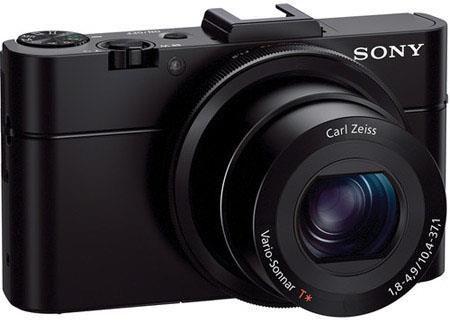
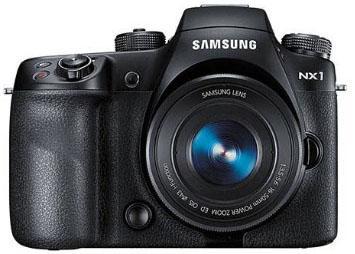
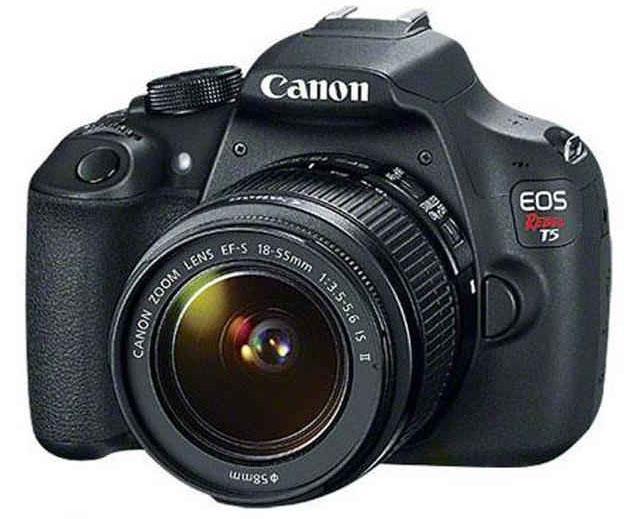
For instance, going with an advanced point-and-shoot over an interchangeable lens camera system typically saves money and is endowed with flexibility and convenience.  That sounds great, but you’re giving up image quality, low light shooting and the ability to have the equipment necessary for just about any shooting situation.  This is just one example, of course.  Here’s another:  if you own an interchangeable lens system, each lens purchase decision involves tradeoffs involving expense, image quality, weight and versatility (prime or zoom?  If the latter, what range?).

Regardless of the decision, you’re virtually always giving up one thing to get another.

I think the prevalence of these tradeoffs was really driven home to me for the first time 11 or 12 years ago when I was trying to decide whether to change camera formats.  I was shooting with a 35mm film SLR at the time, but was investigating large and medium format camera systems.  Compared to the small format I was using, large format (4×5 and up) had the tantalizing advantage of far superior large print quality as well as camera movements.  If you’ve ever seen a big print produced from a good drum scan of a large format transparency or negative, you need no further explanation of the image quality side of the equation.  (And this is still true today; I’ve seen people claim that an image produced from a high resolution DSLR is equal in terms of detail rendering to what can be obtained from a large format film image; that’s absurd.)  The movements capable with a view camera (though limited in even larger formats) allow for extending depth of field range and perspective correction.  Some of this can be done with tilt-shift lenses with smaller formats, but not to the extent that it’s possible with a view camera.

But the disadvantages inherent in large format are substantial.  It takes a long time to master the technique needed to properly operate a large format camera.  There’s no such thing as a large format zoom lens.  Images on the ground glass appear backwards and upside down.  Even for experienced users, merely setting the camera up is a time-consuming process.  Shots will be missed.  Film for this format is extremely expensive (ditto developing…and getting those great drum scans…and large prints, whether you invest in the equipment necessary to do it yourself or send them out).  It’s possible to shoot with a digital back on a large format camera, but that’s even more costly.  The equipment is bulky and extremely inconvenient to haul around.

I ultimately decided that—for me—the advantages of large format were greatly outweighed by the disadvantages.  I felt that the almost overwhelming technical aspects of the format and the inherent rigidity would take a lot of the fun of photography out of the process.  I hasten to add that I know a number of people for whom this isn’t true; these folks shoot with large format cameras and enjoy the process immensely.  All of this, I think, illustrates the tradeoff principle pretty well.

The first step toward making any photo-related decision is acknowledging that these tradeoffs do in fact exist.  Always.  There are no perfect solutions—just better (or best) options.

The second point worth noting is that the “best option” for one person isn’t necessarily the optimal choice for someone else.  In a way, this is merely an extension of the first point.  For example, if I like to take pictures of wildlife, I’m almost certainly going to have a different list of priorities than someone who likes to shoot landscapes and we’re both going to be inclined to value things different than someone who’s into street or travel photography.  It’s not that there can’t be any overlap between us, but the differences are going to be at least as stark as any potential similarities.

Third, there will probably be aspects of any decision that transcend the first two categories.  For instance, I may find a piece of equipment that I think will work extremely well for you, but it may be out of your price range.  Or it might be too heavy for you to handle comfortably.  Or it may inhibit your natural workflow in the field.

The decision-making process can be made easier by taking all of this into account and by prioritizing your own wants, needs and limitations.  Make a list; what things are absolutely critical to you?  How important, for instance, is the ability to shoot many images quickly?  If you’re into wildlife or sports photography, these are key points and your purchase decisions—of cameras, lenses and peripherals (memory cards, for instance)—will be dictated by them.  If you’re a landscape shooter like me, those things aren’t going to be very important, but other priorities (image quality, for instance, to allow for the creation of large prints; versatility (a system that allows me to cover a broad range of focal lengths); weather-sealing, etc.) will take their place and dictate other choices.

Most importantly, don’t let perfection be the enemy of “good enough.”  Perfection does not exist in the world of photography, but “good enough” probably does.  When you find something that meets—but doesn’t’ necessarily exceed—your greatest needs, avoid paralysis by analysis and accept that solution.  Then you can turn your full attention to the aspect of photography that presumably got you interested in the endeavor in the first place:  making images.

Thursday Tips is written by Kerry Mark Leibowitz, a guest blogger on 1001 Scribbles, and appears every other Thursday.  To read more of his thoughts on photography, please visit his blog:  Lightscapes Nature Photography.

Thursday Tips: Less Is More

30 Thursday May 2013

Posted by kerryl29 in Guest Posting, Thursdays Tips

≈ 16 Comments

Tags

great smoky mountains national park, Photography, Tips

As I noted a couple of installments ago, I spent more than a week at Great Smoky Mountains National Park during the spring bloom in April.  It was the third time I’ve shot for an extended stretch in the Smokies during the spring; my first time was five years ago.  While there were some differences (the dogwood bloom was far superior in 2008; the water levels in the streams and rivers were much higher and the moss much greener this time around), the on-the-ground similarities were even more noteworthy.

I spent about the same amount of time in the area in 2008 as I did this year, which enabled me to make an interesting comparison about my own photographic experiences, and what I learned was the following: I snapped the shutter less this time around—a lot less.  I clicked the shutter about 40% less frequently on this trip than the one five years ago.  But here’s the paradox:  I came away with more good images this time around—roughly 1/3 more, in fact.  The signal-to-noise ratio more than doubled.  It’s worth noting that I’ve gotten fussier in my assessment of my own photography over the past five years.  If I applied today’s standards to 2008’s images, the discrepancy would be even larger than that reported above.

So what’s going on?  The conditions weren’t better this year.  I know the area better now than I did then, which intuitively would suggest more shooting opportunities, not fewer.  If anything, I was on the ground even more this time around than in 2008.  Why did I shoot so many fewer images and why did I like a much higher percentage of the images that I did shoot this year?

I think the answer is a function of experience.

I think that, every time I go out with the camera, I’m a little bit better able to recognize a good opportunity than I was on the previous shoot.  From one day to the next, any improvement is so incremental as to be all but indiscernible.  But over five years, the apparent change is dramatic.  So I’m probably less apt to take a (bad) shot now than I was five years ago.  In other words, I’m better able to recognize the shot as bad before clicking the shutter.

I think I’m also better able to perceive images, through the viewfinder, that will accomplish my artistic goals.  This, too, appears to be a dynamic process, as I slowly slide along a seemingly infinite continuum, and it’s the likely explanation for the improved to signal-to-noise ratio I’m seeing.

Ultimately, I think what’s going on is that I am, slowly but surely, becoming a better photographer with each passing day.  It’s easy to miss that improvement week-to-week or month-to-month, but juxtaposing the output from photographic trips to the same place during the same season separated by five years places the result in stark relief.  In any event, that’s the story I’ve been telling myself.

I’m curious to hear if others have had a similar realization.  Feel free to relate your experiences by leaving a comment.

Thursday Tips is written by Kerry Mark Leibowitz, a guest blogger on 1001 Scribbles, and appears every other Thursday.  To read more of his thoughts on photography, please visit his blog:  Lightscapes Nature Photography.

Last Day of the Trip

21 Tuesday May 2013

Posted by tomaszdunn in Tomasz Travels

≈ 7 Comments

Tags

California, San Fransisco, USA

We got up at a reasonable time time and back on to the bus heading off to Lake Tahoe, out of the mountains and towards the coast,San Francisco. IMG_8597 IMG_8601 IMG_8605 IMG_8602 Closer to the city we were kindly greeted by the first traffic jam of the entire trip and also the roaring of the Navy’s Blue Angels shooting ahead above us. We ended up at a hotel and we were all unceremoniously unloaded from the bus alogn with all our bags. I went down to the hostel to sort my self out before joining the rest of the group at Pier 39 (the one with all the Sea Lions( for a boat trip. IMG_8609 IMG_8608 IMG_8606

The boat trip went right around the bay – around Alcatraz and under the Golden Gate bridge as the sun was setting and I managed to get some beautiful shots.

IMG_8615_stitch IMG_8626_stitch IMG_8612 IMG_8637 IMG_8641 IMG_8648 IMG_8669_stitch IMG_8662_stitch IMG_8626_stitch IMG_8650 IMG_8657 IMG_8661 IMG_8678 IMG_8699 IMG_8720 IMG_8722 IMG_8719 IMG_8723 IMG_8740

After that went to eat clam chowder in a bread bowl which was horrendously expensive.  Went for a few drinks and said bye bye to a few people of the group and bye bye to our Tour Leader. The girls got chatting to some Navy Officers and got a cool pic in a Navy Officers hat. Smile  whom I found out were here for Navy Day, hence all the ships in the docks and the Blue Angels earlier in the day. Went back to my hostel for a night in a real bed an not on the floor.

IMG_8741 IMG_8743  IMG_8744 IMG_8746 IMG_8738_stitch

More pics from today and the route

Thursday Tips: A Fool and His Money are Soon Parted

16 Thursday May 2013

Posted by kerryl29 in Guest Posting, Thursdays Tips

≈ 16 Comments

Tags

money, Photography, Tips

There are few pursuits that will empty your wallet more quickly than photography.  Everything about photographic gear, for instance, is expensive.  I mean everything, from $30 (US) bubble levels to exotic prime telephoto lenses that exceed $10,000.  In the digital age, cameras are essentially treated as disposable commodities, accompanied by the explicit notion that of course you’re going to upgrade to the latest model every few years.  And as the bubble level reference above suggests, cameras and lenses are merely part of the equation.  Bags for your equipment, tripods and heads, filters and other accessories…the list is seemingly never-ending, and all the items on it are costly.  At the very least, the informal definition of “photographic equipment” has extended all the way to computer hardware and software ever since the digital darkroom became a realistic option more than a decade ago.

Two recent announcements reminded me of the truism expressed by the above paragraph.  The first is Adobe’s decision to end its perpetual license software offerings for the world’s image editing flagship program, Photoshop.  Whatever you think of the decision, one aspect of it is undeniable:  the price of ongoing full-time access to Photoshop jumped for any standalone user.  The other notable release was Canon’s announcement of the impending availability of its long-awaited 200-400/f4 zoom lens, along with the price—just under $12,000.  By themselves, these announcements don’t mean all that much; they are, however, emblematic of a larger point:  photography is an expensive endeavor and it’s not getting any less costly.

While it’s probably wise to accept the fact that you’re going to have to drop some cash to be involved in photography, you don’t have to bankrupt yourself.  You certainly can spend tens of thousands of (insert your currency of choice here) to outfit yourself and begin a lifelong journey on the upgrade carousel, but this isn’t necessary.  Even if you aspire to a kit populated with high end gear, you need not take out a second mortgage on your home.  Here are some suggestions for ways to keep photography-related purchases from consuming more of your budget than is desirable.

1)  With each piece of gear you’re contemplating buying, ask yourself whether it’s something that will truly further a tangible photographic/artistic goal.  There’s an almost infinite amount of “stuff” available for purchase out there that’s directly or indirectly related to photography.  It’s remarkable, however, how little of it is really necessary, by just about any definition of the term.  For instance, there are some awfully interesting filters on the market, but the only ones I own are a single polarizer and a pair of neutral density filters; I haven’t spent a dime on filters in the last five years, and have no intention of doing so in the foreseeable future.

2)  Shoot with an older camera.  If you buy used or new-but-older camera bodies, you can often cut your purchase prices in half.  While the camera manufacturers would have you believe that anything isn’t the latest model is obsolete, that is rarely the case.  Acquiring a camera that is one generation behind current model lines will save you a tremendous amount of money without, in most cases, compromising quality or function in any meaningful way.  And yes, I have done this myself, more than once.

3) Buy used lenses and/or space out your purchases.  This is something else I’ve done, multiple times.  As long as the components and optics are in good shape, when it comes to image making, a used lens is 100% of a new one.  This is a great way to save a significant amount of cash, particularly considering the fact that a good lens can last you a lifetime.  And once you’ve put your kit completely together, stop shopping around.  I’ve been assembling my current lens outfit for the past eight years.  By purchasing one lens at a time, and putting a year or two between purchases, I’ve slowly been able to piece together a high end kit that meets my needs.  One more lens—which almost certainly won’t be purchased until some time next year, if then—and I’ll be done.

Of course, if you don’t need an interchangeable lens camera system, you can avoid this problem entirely.

4) Keep software purchases to a minimum.  There’s so much photography-related software out there these days, I can’t keep track of it all (and I wouldn’t want to try).  Much of it is either redundant, or is designed to be used as a means to make other software “easier to use.”  I know people who seem to buy every set of Photoshop plug-ins that come down the pike.  (Many of these people spend far more on add-ons than they did on Photoshop itself!) While many of these offerings are quite useful, few if any of them are truly necessary.  Furthermore, the more of these packages you have, the harder it is to master any of them.

5) Take care of your gear.  By taking decent care of your equipment, it can last a long, long time, thereby saving you a lot of money down the road.  And don’t misunderstand—I’m not suggesting foregoing use of your equipment.  I certainly don’t eschew use of my gear.  But I’ve been using the same photo backpack and tripod/ballhead for 10 years and counting, and see no need to replace any of this gear for the foreseeable future.

6) Consider any and all successive upgrades and consider whether they’re worth the trouble.  One of the dirty little secrets of photography is the fact that the camera you were so hot to update brought with it a whole host of needed ancillary updates.  For instance, let’s say I move from a 12 MP camera to a 36 MP camera (as I in fact did, last year).  All that extra resolution sounds great…and it is.  But it probably means getting new larger (and more expensive) flash cards to handle the threefold increase in file size.  It may also mean getting faster cards, since the larger files will take significantly longer, all other things equal, to write to your cards.  You may find that your lenses may be outresolved by your new camera’s sensor.  If that’s not enough, the upgrade may also mean an update to your digital storage system (e.g. larger hard drives).  There’s also a good chance that your entire computer system will no longer be able to adequately process the files you need—an entire computer upgrade may be in the offing.  In short, the cost of your camera update may triple once you’ve added in the secondary and tertiary costs involved in supporting the update.  Caveat emptor.

In sum, photography is expensive, but you can keep your expenses within manageable limits by applying a bit of restraint and common sense.  You need not empty your bank account to enjoyably engage in photography.

Thursday Tips is written by Kerry Mark Leibowitz, a guest blogger on 1001 Scribbles, and appears every other Thursday.  To read more of his thoughts on photography, please visit his blog:  Lightscapes Nature Photography.

Lake Tahoe and Catamarans

07 Tuesday May 2013

Posted by tomaszdunn in Tomasz Travels

≈ 10 Comments

Tags

California, Catamaran, Cold, Lake Tahoe, Nevada, USA

Got up late after having a nice cozy bed for a change and saw snow outside.

The group and I wasted the entire morning watching the Never ending story (still find it incredibly surreal) then went on a catamaran called the  Windwalker 2 round the lake.

IMG_8576 IMG_8482_stitch IMG_8493_stitch IMG_8514_stitch IMG_8527_stitch IMG_8513 IMG_8536 IMG_8540 IMG_8528

As you can tell from the pictures it was, bitterly cold and freezing and the wind didn’t help either. We had plenty of drinks on board to try to warm us up and got plenty of pictures of the mountains around the lake.

IMG_8538 IMG_8550 IMG_8543  IMG_8567 IMG_8515 IMG_8525

After the trip some of us were dropped off in Tahoe Town itself and we had a walk around. It was absolutely freezing but it looked great place to be in the Winter (if any one has been let me know). We were picked up and greeted with a roast dinner in the cabin by some of the other Brits who cooked it for us Smile. Went for a walk on the beach, and went back in after I could no longer feel my toes as it got too cold.

IMG_8580 IMG_8583 IMG_8584 IMG_8585

The route and more pics from today

IMG_8586_stitch IMG_8586

← Older posts

1001 Scribbles

Ana Silva

Coimbra, Portugal

Email: 1001scribbles@gmail.com

All This is PORTUGAL

Links

  • All This is PORTUGAL
  • Bloglovin'
  • Etsy Shop
  • Twitter
  • WordPress.com

Categories

  • Austria
  • Belgium
  • Czech Republic
  • France
  • Germany
  • Italy
  • Netherlands
  • Portugal
  • Slovakia
  • Slovenia
  • Spain
  • UK
  • I Wish
  • Uncategorized
  • Guest Posting
    • Adventures Abroad
    • Films of Meaning
    • Thursdays Tips
    • Tomasz Travels

Archives

Blog Stats

  • 109,390 hits
  • RSS - Posts
  • RSS - Comments

Indique o seu endereço de email para subscrever este blog e receber notificações de novos posts por email.

Join 4,765 other followers

Free counters!
VFXY Photos

Blog at WordPress.com. Theme: Chateau by Ignacio Ricci.